
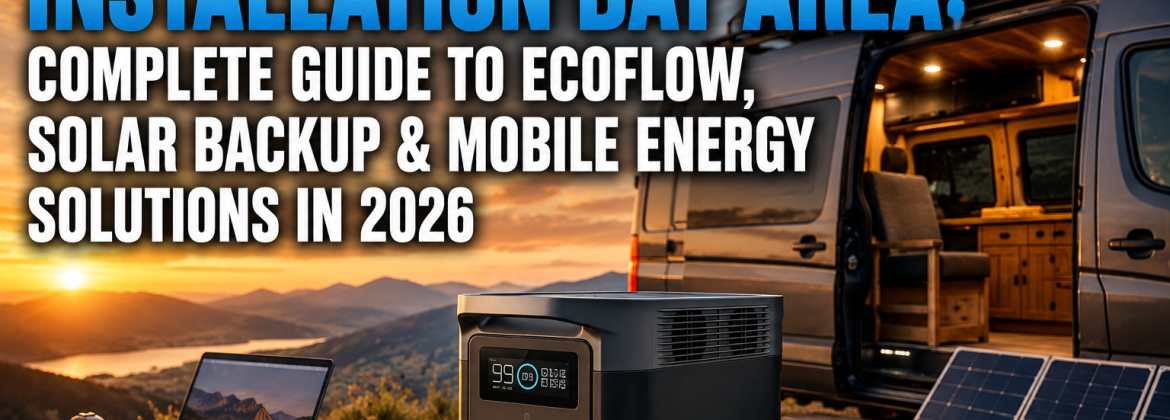
Portable power stations provide convenient off-grid electricity, but integrating them into RVs, camper vans, and adventure vehicles requires proper wiring, charging management, and safety considerations that go well beyond simply plugging a unit in. Modern portable power stations exemplified by high-capacity modular systems from brands like EcoFlow combine dense lithium battery storage, pure sine wave inverters, and sophisticated solar charging controllers into compact, versatile units. However, simply purchasing a standalone power box is rarely enough for seamless integration into a vehicle. Professional Portable Power Station Installation Bay Area work ensures these mobile energy systems are safely wired, correctly integrated with vehicle charging circuits, and paired with efficient rooftop or portable solar arrays.
Ready to build a reliable portable power setup for your RV, camper van, or overlanding vehicle? Audiomobile Hayward provides professional Portable Power Station Installation Bay Area service, EcoFlow integration, solar charging solutions, and custom electrical upgrades designed for dependable off-grid performance. Contact our team today at +1 510-901-3864 to discuss your mobile power project.
1. What Is Portable Power Station Installation?
Portable power station installation is the process of professionally integrating a unit like an EcoFlow Delta or similar system into your RV, camper van, or overlanding vehicle rather than simply using it as a standalone box you carry along and plug in as needed. A modern portable power station is built around four core subsystems:
| Subsystem | Component | Function |
|---|---|---|
| Energy Storage | Lithium Iron Phosphate (LiFePO4) battery cells | Stores high volumes of electrical energy safely and efficiently |
| Inversion | Pure Sine Wave AC Inverter | Converts stored DC battery power into clean 120V household AC electricity |
| Distribution | AC outlets, USB-PD ports, 12V DC sockets | Powers multiple diverse devices simultaneously |
| Recharging Hub | MPPT solar charge controller, DC-to-DC charger | Replenishes battery reserves via solar panels, vehicle alternators, or grid power |
Professional installation is what connects these subsystems directly into your vehicle rather than leaving them as a portable accessory. Here’s what that process actually involves:
- Power Requirement Assessment: We evaluate what you plan to run—refrigerator, lighting, electronics, and communication gear and calculate real daily amp-hour consumption.
- Selecting Battery Capacity: Based on that assessment, we size the power station and any auxiliary battery modules to match your typical trip length, not just a generic estimate.
- Evaluating Charging Sources: We determine the right mix of solar, vehicle alternator (DC-to-DC), and shore power charging for how and where you actually travel.
- Wiring and Fuse Installation: Circuits are run with properly rated cable, fusing, and disconnects between the power station and every charging source and load.
- Solar Integration: Rooftop or portable panels are wired through an MPPT controller matched to your power station’s charging profile.
- Testing and System Optimization: The completed system is load-tested under real conditions and fine-tuned before you ever depend on it in the field.
This is the difference between owning a portable power station and having a properly installed mobile energy solutions system built into your vehicle.
2. Why Bay Area RV and Overlanding Owners Need Portable Power Solutions
The lifestyle of Bay Area residents increasingly bridges urban convenience and remote outdoor exploration. Weekend getaways, extended road trips, and remote work from unconventional locations require robust power infrastructure that a factory vehicle electrical system was never designed to provide.
Traditional power solutions exhibit real limitations for RV and overlanding travel:
- Campground Hookup Dependence: Relying on campground electrical pedestals restricts travel to developed sites, limiting true wilderness exploration.
- Vehicle Alternator Constraints: Charging accessories directly from a factory vehicle starting battery quickly drains the battery, leaving motorists stranded.
- Unreliable Portable Setups: Loose cables, unrated connections, and mismatched chargers create frustrating power failures in the field.
Investing in professional portable power station integration provides genuine energy independence on the road, letting you power refrigeration, communication gear, and electronics wherever you park for the night. Many owners also appreciate that a properly installed system can pull double duty, riding along for weekend trips and offering a backup source of power at home if the grid goes down but for Bay Area RV and overlanding owners, the primary driver is reliable off-grid power solutions built specifically around vehicle travel. Once installed, that same off-grid power solutions approach scales easily as your travel habits grow, whether that means adding a second battery module or expanding your solar array.
3. EcoFlow Installation and Mobile Power Integration
While portable power units are designed to be mobile, integrating high-capacity systems into an RV or adventure vehicle requires professional engineering. Systems like the EcoFlow Delta series can be hardwired into a vehicle’s electrical distribution panel, enabling automated pass-through charging and seamless power delivery to onboard appliances.
Professional EcoFlow installation ensures:
- Proper Circuit Integration: Safely routing high-amperage lines from vehicle alternators and solar arrays into the power station.
- Secure Mechanical Mounting: Ensuring heavy battery units remain firmly anchored during rugged off-road driving.
- System Reliability: Eliminating voltage drop and preventing thermal overloads through professional fusing and wire sizing.
Getting the fundamentals right also means reviewing your vehicle’s existing wiring. Our breakdown of vehicle power system upgrades covers the charging and grounding upgrades that keep a portable power installation running clean. A properly executed EcoFlow installation also accounts for how the unit will be accessed day-to-day; a power station buried under gear becomes far less useful than one mounted with the display and outlets within easy reach. Yes, Audiomobile Hayward installs and integrates EcoFlow systems directly into RV, camper van, and overlanding vehicle electrical panels, not just as a standalone accessory.
4. How Solar Charging Improves Portable Power Systems
Pairing a portable power station with solar panels unlocks unlimited off-grid endurance. By harnessing photovoltaic energy, travelers can replenish their battery reserves daily without burning fuel or plugging into shore power.
Modern portable solar power systems utilize lightweight, flexible, or rigid monocrystalline panels connected to high-efficiency charge controllers. This setup integrates seamlessly with our comprehensive Solar System Design & Build services, providing a sustainable energy cycle for extended trips. The practical benefits are straightforward:
- Faster Recharging: A properly matched solar array replenishes your battery bank in hours rather than waiting for the next shore power hookup.
- Longer Off-Grid Time: Daily solar input extends how many nights you can stay off-grid before needing to recharge from another source.
- Renewable, Fuel-Free Charging: No fuel to carry, no engine to run, just quiet charging as long as the sun is out.
Panel choice matters as much as capacity. Rigid panels generally deliver higher efficiency per square foot and hold up better over years of use, while flexible and portable folding panels trade some efficiency for the ability to be repositioned to follow the sun. Many Bay Area travelers pairing portable solar power systems with their power station opt for a rooftop-mounted array as a baseline charging source, supplemented by a portable folding panel for situations where the vehicle is parked in shade.
5. RV Portable Power Setup: Creating Reliable Off-Grid Electricity
Integrating a portable power station into an RV portable power setup dramatically enhances the vehicle’s electrical capacity without requiring a complex, permanent battery bank overhaul. Modern RV refrigerators, LED lighting systems, CPAP machines, and communication electronics run effortlessly on clean inverter power, ensuring absolute comfort on the road.
This approach appeals especially to owners of smaller travel trailers or camper vans who want meaningful off-grid capability without committing to a full lithium battery bank installation. A well-configured RV portable power setup can be added to an existing rig in a single day, then expanded later with additional battery modules or solar panels as your power needs grow, a flexibility that a hardwired system doesn’t always offer as easily.
This modularity is particularly valuable for owners who are still figuring out how they’ll actually use their rig. A couple starting with occasional weekend trips might begin with a single power station and one solar panel, then add a second battery module and a rooftop array once they discover they are spending more nights off-grid than expected. Rather than guessing at final capacity requirements upfront, a properly installed, expandable system lets the electrical setup grow alongside actual travel habits.
6. Overlanding Power Systems for Remote Adventures
Overlanding requires traveling deep into remote terrain where conventional infrastructure does not exist. Comprehensive overlanding power and vehicle upgrade solutions ensure that auxiliary refrigerators, camp kitchens, winches, and communication gear remain fully powered. Complementing power builds with adventure vehicle accessories and upgrades and reliable communication solutions for outdoor vehicles creates a truly self-sufficient expedition rig.
Multi-day overlanding trips place very different demands on a power system than weekend camping. A refrigerator running continuously for a week, combined with daily device charging, radio use, and camp lighting, adds up quickly, which is why experienced overlanders typically oversize their battery and solar capacity beyond a simple daily-use estimate, giving themselves a buffer for consecutive cloudy days.
Redundancy also matters the farther a trip goes off the beaten path. Overlanders traveling well beyond cell coverage often pair their portable power station with a secondary charging path, a second, smaller panel stored separately, or a DC-to-DC charger wired to the alternator as backup so a single point of failure never leaves the whole trip without power. This kind of layered planning is exactly where a professional installer’s experience with remote-travel electrical systems pays for itself.
7. What Can Portable Power Stations Run?
Modern power stations offer incredible versatility regarding what they can power once properly installed in an RV or vehicle. Capacity planning depends on your specific equipment demands:
- Small Electronics: Smartphones, tablets, cameras, and drones can be recharged dozens of times.
- Work Essentials: Laptops, satellite internet terminals, and mobile workstations run continuously for remote productivity.
- Refrigeration & Comfort: Portable 12V refrigerators, electric blankets, LED lighting strips, and medical devices operate reliably overnight.
Thoughtful camping power upgrades start with an honest inventory of what you actually plan to run in your vehicle, followed by a small buffer for unexpected additions, a spare device battery, or an extra light for a longer-than-planned evening at camp. Overestimating slightly here costs little, while underestimating can mean a dead battery halfway through a trip. This is exactly the kind of capacity planning a professional installer walks through with you before any wiring begins, and it’s what separates thoughtful camping power upgrades from simply buying the biggest battery available and hoping it’s enough.
8. Common Portable Power Installation Mistakes To Avoid
Amateur power installations frequently suffer from critical errors, including selecting inadequate battery capacities, using undersized wiring that creates severe voltage drop, and improper solar panel fusing. Relying on expert professional electrical diagnostics ensures your electrical architecture is engineered correctly from the start.
A frequently overlooked mistake is sizing a system around best-case solar conditions rather than realistic ones. A panel rated for 200 watts under perfect midday sun will produce noticeably less on an overcast Northern California morning or when partially shaded by trees at a forested campsite. Professional installers account for this real-world derating when sizing a system; rather than promising capacity, the setup will rarely, if ever, actually deliver.
Another common error is neglecting proper disconnects and fusing between the power station and its charging sources. A direct wire run from a vehicle alternator to a power station without a dedicated fuse and isolator not only risks damaging the power station during a voltage spike, but can also drain a vehicle’s starting battery if the charging profile isn’t properly configured to stop drawing current once the engine shuts off. These are exactly the kinds of details that separate a system installed by an experienced professional from one assembled by simply following a wiring diagram found online.
9. Portable Power Station Installation Cost Factors
The investment required for professional portable power station installation depends on several factors: battery capacity, solar array size, the complexity of integrating with your vehicle’s existing electrical system, and whether you’re adding a single unit or a full EcoFlow-based setup with multiple charging sources. Rather than opting for a rigid, one-size-fits-all package, a proper installation is priced around your specific vehicle and travel needs.
It’s worth briefly weighing a portable power station against a traditional gas generator when budgeting, since the two solve a similar problem in very different ways. Power stations offer silent, emission-free operation and require no fuel storage or engine maintenance, while generators provide continuous run time as long as fuel is supplied but come with regular upkeep and noise. Over a multi-year ownership period, many owners find a quality lithium power station’s lack of moving parts and minimal maintenance narrows or closes the upfront price gap.
| Portable Power Station | Gas Generator | |
|---|---|---|
| Noise | Silent | Loud |
| Maintenance | Minimal, no moving parts | Regular oil changes, tune-ups |
| Fuel | None required | Requires storage and refueling |
| Best For | Daily use, campgrounds, indoor-safe charging | Extended high-draw, off-grid base camps |
10. Choosing the Right Portable Power Installer in the Bay Area
Entrusting your vehicle’s electrical system to experienced professionals guarantees safety, compliance, and long-term reliability. Audiomobile Hayward combines advanced electrical integration expertise with vehicle electronics and custom fabrication experience, the same skill set behind our overlanding accessory builds and solar-based vehicle systems, to deliver flawless mobile energy solutions.
When evaluating an installer, look beyond the equipment brand and ask about their experience with your specific vehicle type and use case. An installer who regularly works with RVs, overlanding rigs, vehicle electronics, and solar-based systems will understand the tradeoffs between battery chemistry, inverter sizing, and solar capacity far better than a generalist, and that experience is what turns a collection of good components into a dependable, professionally integrated power system you can actually count on.
Ask prospective installers how they approach capacity planning, not just installation. A shop that takes the time to walk through your actual appliances, trip length, and charging habits before recommending equipment is far more likely to deliver a system sized the first time correctly.
Frequently Asked Questions
1. What is a portable power station?
An all-in-one mobile energy unit combining lithium battery storage, an AC inverter, multiple charging ports, and solar regulation.
2. Do portable power stations need professional installation?
While standalone units require no installation, hardwiring them into RV or vehicle electrical systems requires professional expertise.
3. How much does portable power station installation cost in the Bay Area?
Costs depend on system capacity, integration complexity, and solar panel requirements.
4. Can portable power stations be used in RVs?
Yes, they serve as excellent auxiliary or primary power sources for modern motorhomes and travel trailers.
5. What is the difference between a portable power station and a generator?
Power stations store electricity chemically in batteries, whereas generators burn fuel to generate electricity mechanically.
6. Can solar panels charge a portable power station?
Yes, most modern power stations accept direct solar panel inputs via standard photovoltaic connectors.
7. What size portable power station do I need for camping?
Capacity requirements depend on the wattage and run time of the appliances you intend to power.
8. Can EcoFlow systems be integrated into RV electrical setups?
Yes, EcoFlow units can be professionally integrated into RV shore power and DC distribution circuits.
9. Are portable power stations suitable for overlanding vehicles?
They provide quiet, reliable, emission-free power for remote overlanding expeditions.
10. How can I create a reliable off-grid power system?
Combine a high-capacity lithium power station with a robust solar array and professional electrical integration.
11. Can Audiomobile install EcoFlow portable power stations in vehicles?
Yes. Audiomobile Hayward professionally integrates EcoFlow and other portable power station brands directly into RV, camper van, and overlanding vehicle electrical systems, including solar and alternator charging.
12. What vehicles benefit from portable power station installation?
RVs, camper vans, overlanding vehicles, adventure trucks, and remote work vehicles all benefit from a professionally installed portable power system.
13. Can a portable power station replace a vehicle battery upgrade?
In many cases, yes, a portable power station can provide auxiliary power without a full lithium battery bank overhaul, though the right choice depends on your capacity needs and travel style.
14. How long does portable power station installation take?
A basic single-unit installation can often be completed in a day, while a full EcoFlow setup with solar integration and custom wiring may take several days.
Ready to get professional portable power station installation for your RV, camper van, or overlanding rig? Audiomobile Hayward integrates EcoFlow and other portable power systems with solar charging and custom wiring built for dependable off-grid performance. Contact our team today at +1 510-901-3864 to schedule your installation consultation.
Follow Audiomobile Hayward on Facebook and Instagram to explore real EcoFlow and portable power installations, RV electrical builds, and mobile energy upgrades. From RV power integrations to overlanding electronics, our projects showcase how professional installation makes modern portable power systems actually work the way they’re supposed to. Stay connected with our team for installation updates and helpful upgrade ideas.
David Trinh