
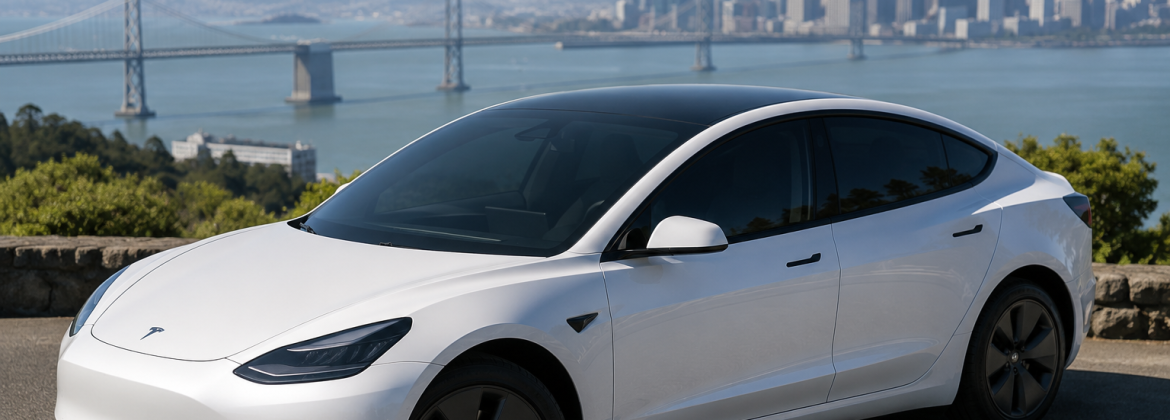
Tesla window tint has become a popular solution for Bay Area summers, especially if you drive a Tesla. The same expansive glass architecture that makes a Model 3, Model Y, or Model S feel like a rolling greenhouse at 2 PM in a Hayward parking lot is exactly what makes your car look and feel premium the rest of the time. But from May through October, East Bay drivers sitting behind all that glass know the specific discomfort of a cabin that climbs past 130 degrees Fahrenheit while their car sits outside Fremont or Oakland.
This is not a problem that goes away by cracking a window. And it is not one that Tesla’s factory glass fully solves on its own, despite what many new Tesla owners assume when they pick up their car. The factory UV coating that Tesla applies helps with ultraviolet exposure, but it does very little about infrared radiation, which is the primary source of the heat you feel building up inside your vehicle.
More Tesla owners across Hayward, Fremont, Oakland, and San Jose are choosing professional ceramic window tint installation as the single most effective upgrade for summer comfort and battery range protection. This guide covers everything Tesla owners in the Bay Area need to know before booking their Tesla window tint installation.
Why Tesla Glass Creates a Unique Heat Problem in the Bay Area
Every Tesla model that has been sold since the Model 3 launched in 2017 features significantly more glass surface area than a conventional vehicle. The panoramic glass roof on the Model 3 and Model Y is a single large piece of glass that runs from the base of the windshield to the top of the rear window, covering both front and rear passengers with almost no opaque headliner above them. The Model X and Model S have similarly expansive glass structures.
This design creates a thermal load problem in hot weather that is genuinely more significant than what most gasoline-powered vehicle owners experience. In a conventional car, the roof above the passengers is a painted steel panel that reflects and sheds much of the solar heat before it reaches the cabin. In a Tesla with a glass roof, solar energy passes directly through the glass and into the cabin air, radiating down onto rear passengers and heating every surface it contacts.
Tesla applies a factory-applied UV and infrared-filtering interlayer to the glass, which the company describes as providing a degree of solar protection. What the factory coating does not do is match the heat rejection performance of a quality aftermarket ceramic window tint film. Studies and real-world measurements consistently show that even on glass roof Teslas with factory treatment, the cabin temperature under direct Bay Area summer sun climbs significantly above what ceramic tint-equipped vehicles experience, particularly in the rear seat area.
For a broader understanding of how much heat standard and ceramic tints actually reject and what the performance numbers mean, our detailed comparison of ceramic vs standard window tint for Hayward drivers breaks down TSER, VLT, and IR rejection in plain terms.
Why Ceramic Tint Is the Only Right Choice for a Tesla
Not all window tint films perform equally on Teslas, and the choice of film technology is more consequential on a Tesla than on almost any other vehicle. Here is why ceramic tint is the specific recommendation for every Tesla model:
Metallic Tints Are Off the Table
Metallic tint films use metallic particles to reflect infrared radiation, and they perform well in heat rejection tests. But on a Tesla, metallic films create a serious problem: they interfere with the radio frequency signals that Tesla’s systems depend on. A metallic tint installed on a Tesla can degrade cellular connectivity, weaken GPS accuracy, interfere with the phone key function that replaces a traditional key fob, and in some cases affect Autopilot camera calibration and performance. These are not theoretical concerns. Bay Area Tesla owners who have made this mistake report real disruption to daily use. Metallic tint is not compatible with Tesla vehicles.
Dyed Films Fail Under High-Temperature Glass Roof Conditions
Standard dyed window tint films absorb solar energy rather than reflecting or blocking it. Under direct California summer sun on a Tesla glass roof, the temperatures at the glass surface can exceed 160 degrees Fahrenheit. Dyed films are not designed to operate at these temperatures over extended periods. They begin to break down, fade, and delaminate within one to two years when installed on a glass roof in the Bay Area climate. A dyed tint that looks acceptable in September will often show visible degradation by the following summer.
Ceramic Film Handles Everything Tesla Glass Demands
Nano-ceramic window tint uses non-metallic, non-conductive ceramic particles that are embedded in the film layers. This technology blocks infrared radiation at the glass level without using any material that interferes with radio frequency signals. Ceramic tint on a Tesla is fully compatible with Autopilot, phone key, GPS, cellular connectivity, and all of Tesla’s over-the-air update functions. It also tolerates the extreme glass surface temperatures of a Bay Area summer without fading, bubbling, or delaminating.
From a performance standpoint, quality ceramic films block up to 99 percent of UV radiation and can reject 80 to 90 percent of infrared radiation, delivering a measurable reduction in cabin peak temperature of 20 to 30 degrees Fahrenheit compared to uncoated glass. For a Tesla driver, that difference translates directly into a more comfortable cabin and a more efficient climate control system that draws less from the battery during hot-weather driving.
Our full guide on ceramic window tint benefits for California drivers covers how ceramic film technology works at the technical level and why the performance gap versus standard films is so significant in California’s climate.
The Tesla Battery Range Connection: Heat Rejection Pays in Miles
Every Tesla owner cares about battery range, and this is one of the strongest arguments for ceramic window tint that is specific to electric vehicles and does not apply in the same way to gasoline-powered cars.
In a hot Bay Area summer, a parked Tesla with no shade and no preconditioned cabin will have an interior temperature well above 130 degrees Fahrenheit when the driver returns. Starting from that temperature, the climate control system has to work extremely hard to bring the cabin down to a comfortable driving temperature, and it draws significant battery power to do so. The energy consumed by the HVAC system in this scenario is not trivial: on a hot day with a severely overheated cabin, early cooling can consume multiple miles of equivalent battery range before the car even begins moving.
Ceramic tint reduces the peak cabin temperature your vehicle reaches while parked by blocking the infrared radiation that does most of the heating work. A Tesla with quality heat-rejection window tint on all glass surfaces, including the roof, reaches a meaningfully lower peak temperature on a hot day. The climate control system starts from a lower baseline, reaches a comfortable temperature faster, and consumes less battery energy doing it. For Bay Area Tesla drivers who commute in summer heat, this range efficiency improvement is real and consistent across every hot day of use.
This is also why ceramic tint is one of the most cost-effective upgrades available for a Tesla from a total cost of ownership perspective. The range efficiency improvement over three to five years of Bay Area summer driving adds up to meaningful savings in charging cost and reduced HVAC strain.
Recommended Ceramic Tint Setup for Each Tesla Model
Tesla Model 3
The Model 3 features a large single-piece panoramic glass roof, front side windows, rear side windows, and a rear windshield. The recommended approach for Bay Area drivers:
- Glass roof: 70 to 90 percent VLT ceramic film. This maintains the open, airy feel that makes the Model 3’s interior special while adding significant heat rejection. Passengers in the rear seat directly beneath the glass roof benefit the most from this installation.
- Front side windows: California law requires, at minimum, 70 percent VLT combined with factory glass on front side windows. A high-VLT ceramic film that meets legal requirements while maximizing heat rejection and UV protection is the right choice here.
- Rear side windows and rear windshield: California law allows any darkness on rear glass. Most Bay Area Model 3 owners choose 20 to 35 percent VLT on rear side windows for privacy and heat rejection and a matching shade on the rear windshield. Dual-side mirrors are required if the rear window is tinted.
Tesla Model Y
The Model Y has the most expansive glass roof of any mainstream Tesla, covering the entire length of the roof above all four passengers. Heat loading through the Model Y roof is the most significant of any Tesla model currently in production. Ceramic roof tint is not optional on a Bay Area Model Y if summer comfort is a priority.
- Glass roof: 70 to 85 percent VLT ceramic film cut as a single piece without seams. A seamed cut on a Tesla glass roof is visible and aesthetically problematic. Professional installation using a plotter cut of the correct dimensions for the Model Y-specific roof geometry is essential.
- Front-side windows: Highest legal VLT ceramic film to maximize heat rejection while maintaining California compliance.
- Rear side windows and rear windshield: 20 to 35 percent VLT ceramic for privacy and heat management. Particularly valuable on the Model Y because the rear passenger compartment sits directly beneath the glass roof.
Tesla Model S
The Model S has a glass roof option and standard side windows with frameless glass that requires precision cutting by an experienced installer. The full glass treatment follows the same principles as the Model 3, with careful attention to frameless window edge quality during installation.
Tesla Model X
The Model X features distinctive falcon-wing rear doors and a large front windshield that extends above the driver’s head. The expansive windshield of the Model X catches significant direct sun exposure during the Bay Area’s long afternoon hours. A clear ceramic film on the Model X windshield, which is legal as a full windshield application for UV filtering without darkening, adds meaningful protection without affecting forward visibility.
California Window Tint Laws for Tesla Owners: What You Need to Know
California Vehicle Code Section 26708 governs window tint across all vehicles in the state, including Teslas. Understanding the rules before your installation ensures you drive legally and avoid fix-it tickets that require tint removal.
Front Side Windows
Front-side windows must allow at least 70 percent VLT (visible light transmission) measured as the combined result of the factory glass and any applied film. Because most Tesla factory glass already has a slight tint, the aftermarket film applied to front windows needs to be very high VLT to keep the combined measurement at or above 70 percent. A professional installer measures your factory glass VLT before selecting the appropriate film for front windows.
Rear Side Windows and Rear Windshield
California law places no darkness restriction on rear-side windows or the rear windshield. Any VLT level is legal. If you apply tint to the rear windshield, your vehicle must have functional dual exterior side mirrors. All Tesla models already have dual mirrors as standard equipment, so this requirement is automatically met.
Glass Roof
The Tesla glass roof is not regulated under California’s window tint VLT rules, which apply specifically to side windows and the rear windshield. There is no legal darkness restriction on the glass roof, giving you full freedom to choose the VLT that best balances your heat rejection needs with your preference for light transmission into the cabin.
Windshield
A non-reflective, colorless tint strip is allowed on the top four inches of the windshield above the AS-1 line. A full windshield clear ceramic film for UV filtering only is permitted in some configurations. Any colored, reflective, or darkening film on the main windshield area below the AS-1 line is prohibited in California. Audiomobile’s installation team at our window tint services page advises every Tesla customer on exactly which configuration is compliant with their specific model. For a complete breakdown of California’s rules, our California window tint law guide covers every window position and all current regulations.
How Tesla Tint Installation Differs From Standard Vehicle Tinting
Tesla window tint installation is not the same job as tinting a conventional sedan, and not every tint shop in Hayward, Fremont, or Oakland has the experience to do it correctly. Here is what makes Tesla-specific installation different:
Frameless Windows Require Edge Precision
Tesla side windows are frameless, meaning the glass sits against a rubber door seal with no visible metal frame around the edge. On a conventional car, tint film can be tucked under a rubber gasket or hidden behind a door frame. On a Tesla, the film edge is exposed and visible when the window is rolled down. An imprecise or roughly cut edge is immediately visible. Professional Tesla tint installation requires precision cutting equipment and experienced handling of frameless glass.
Glass Roof Single-Piece Cuts
The Model 3 and Model Y glass roofs must be cut as a single piece without seams. A seam across the roof is permanently visible and cannot be corrected without a full reinstallation. Professional installers use computer-plotted pattern cuts specific to each Tesla model year to produce a clean, seamless single-piece roof film. This is a capability that separates qualified installers from shops that do not specialize in Tesla work.
Autopilot Camera Clearance
The forward-facing Autopilot camera array sits behind the rearview mirror at the top of the windshield. Any film application near the windshield must be cut with precise clearance from the camera housing to avoid obstructing the camera field of view or creating reflections that interfere with Autopilot function. A professional installer knows the exact camera footprint for each Tesla model and cuts accordingly.
No Post-Installation Window Operation
After any window tint installation, the newly applied film needs time to cure before the windows are operated. Professional installers advise Tesla owners to keep side windows fully up for a minimum of three to five days after installation to allow the adhesive to cure fully without disruption. Rolling a freshly tinted window down before curing is complete causes the film to lift from the glass edge and requires reinstallation.
What to Expect From Professional Tesla Tint Installation at Audiomobile Hayward
Audiomobile has been serving vehicle owners across Hayward and the East Bay since 1975. Our team installs ceramic window tint on Teslas and all vehicle types, and we understand the specific requirements of each Tesla model’s glass architecture.
When you bring your Tesla to our shop at 24031 Mission Blvd in Hayward, here is what the installation process looks like:
- We measure your factory glass VLT on front windows to confirm the correct legal film selection for the front-side windows.
- We confirm your desired VLT selections for rear glass and roof, advising on the heat rejection performance of each option.
- The installation environment is controlled and dust-free. Glass surfaces are cleaned thoroughly before film application.
- Roof film is cut as a single seamless piece using precision plotter cuts matched to your specific model year.
- Autopilot camera clearance is maintained on all windshield area applications.
- Side window frameless edges are cut with the precision required to produce clean, invisible edges when the windows are rolled down.
- After installation, we walk you through the curing process and care instructions specific to your film.
You can see examples of completed Tesla and other vehicle tint installations in our project gallery and read what our customers say on our testimonials page. Our experienced team is also introduced on the Audiomobile team page.
Tesla Tint Pricing in Hayward, Fremont, and the East Bay
Professional ceramic window tint installation for a Tesla in the Bay Area runs higher than a basic tint job on a standard sedan, for good reasons: the glass area is larger, the installation complexity is greater, and quality ceramic film costs more than standard dyed or carbon films. Here is a realistic range for Bay Area Tesla owners in 2026:
- Tesla Model 3 full ceramic tint (all windows plus roof): $400 to $700 depending on film brand and VLT selections
- Tesla Model Y full ceramic tint (all windows plus roof): $500 to $850 depending on film brand and the size of the glass roof
- Front windows only (legal compliance install): $150 to $250
- Glass roof only: $200 to $350
These are market ranges. Audiomobile’s specific pricing depends on the film brand you choose, the number of windows included, and your VLT selections. For a complete picture of what window tint installation costs in Hayward, Fremont, and San Jose, our window tint cost guide for the Bay Area breaks down pricing by vehicle type, window configuration, and film type. For a free estimate specific to your Tesla, contact our shop directly through the Audiomobile contact page or Call +1 510-839-1992.
What Happens If You Skip Ceramic and Choose a Cheaper Film on Your Tesla
The cost difference between ceramic and cheaper film options on a Tesla is real, but so are the consequences of making the wrong choice:
- Dyed film on a glass roof: Will delaminate within one to two Bay Area summers as extreme glass surface temperatures break down the film adhesive and dye layer. A reinstallation in year two costs more than the original ceramic upgrade would have.
- Metallic or carbon-metallic film: Potential disruption to cellular signal, GPS, phone key reliability, and Autopilot camera performance. The cost of troubleshooting unexpected software or connectivity issues on a Tesla is not trivial.
- Low-grade ceramic alternatives: Not all films marketed as ceramic deliver equivalent performance. Products from established manufacturers, including SunTek, Llumar, 3M, and Madico, have independently verified heat rejection ratings. Generic alternatives with ceramic marketing language but without verified TSER and IR ratings frequently underperform against their claims.
A quality ceramic installation at the outset lasts the life of your vehicle with no degradation in heat rejection performance. Our guide on why some tints fade faster and how to prevent it explains the material science behind film longevity and what separates a durable ceramic installation from one that fails prematurely.
Pairing Tesla Ceramic Tint with Other Smart Upgrades
Many Bay Area Tesla owners who come to Audiomobile for a window tint installation also explore additional electronics upgrades that complement the tint job and further improve their EV experience:
Dashcam system upgrade: While Tesla’s built-in dashcam (TeslaCam) provides basic front and side recording, many owners add a dedicated dashcam system for higher video quality, improved low-light performance, and better parking mode coverage. A professionally installed dedicated dashcam is often cleaner and more capable than relying on the TeslaCam system alone.
Security system and alarm: Tesla’s factory alarm and sentry mode provide a reasonable level of security, but Bay Area vehicle theft rates continue to drive interest in additional layers. A professional security system installation adds immobilizer capability, GPS tracking, and alarm features that operate independently of Tesla’s connected app ecosystem, meaning your vehicle is protected even if connectivity is disrupted.
Blind spot detection: Tesla’s factory blind spot indicators are camera-based and can have limitations in certain driving conditions. An aftermarket blind spot detection system adds radar or ultrasonic-based detection that operates in conditions where camera systems struggle.
See recent Tesla and EV upgrades from our shop on Facebook and Instagram where we post completed installations across Hayward, Fremont, Oakland, and the wider East Bay.
Why Audiomobile Hayward Is Your Tint Shop Near You for Tesla Installations
Audiomobile has been serving the Hayward and East Bay community since 1975. We are not a pop-up tint operation or a national franchise. We are a locally owned shop with more than 50 years of hands-on vehicle electronics and accessory installation experience, and our team has worked on Teslas since they became common in the East Bay market.
When you search for a car tint shop near you for your Tesla in Hayward, Fremont, Oakland, San Leandro, San Jose, or anywhere in the East Bay, Audiomobile offers what most shops cannot: deep experience with EV-specific installation requirements, honest material recommendations without upselling, and installation quality that you will see in the cleanliness of the film edges and the seamlessness of the roof cut every time you look at your car.
We are located at 24031 Mission Blvd, Hayward, CA 94544. You can reach us at +1 510-839-1992 or visit the contact page to schedule your Tesla tint appointment. Our FAQ page answers the most common questions about tint film types, installation timelines, and curing requirements.
Frequently Asked Questions: Tesla Window Tint in the Bay Area
Does Tesla factory glass already have heat-blocking protection?
Yes, but only partially. Tesla applies a UV and infrared filtering interlayer to its glass, which provides more solar protection than completely untreated glass. However, the factory treatment does not match the heat rejection performance of a quality aftermarket ceramic film. On hot Bay Area days, even with factory glass treatment, cabin temperatures climb significantly in parked Teslas, particularly in the rear seat area beneath the glass roof. Aftermarket ceramic tint adds a meaningful additional layer of heat rejection that the factory glass does not provide on its own.
Can window tint interfere with Tesla Autopilot or other electronics?
Metallic and carbon-metallic tint films can interfere with Tesla’s electronics, including cellular connectivity, GPS accuracy, phone key function, and Autopilot camera performance. Ceramic films use non-conductive, non-metallic particles and do not affect any of Tesla’s electronic systems. This is the primary reason ceramic is the recommended tint technology for all Tesla models. At Audiomobile, we install only ceramic and ceramic-based films on Tesla vehicles.
What is the California legal tint limit for Tesla front windows?
California Vehicle Code Section 26708 requires front side windows to allow at least 70 percent visible light transmission, measured as the combined result of factory glass and any applied film. Because Tesla factory glass already has a slight tint, the aftermarket film applied to front windows must be very high VLT, typically 88 percent or higher on its own, to keep the combined measurement at or above the 70 percent legal limit. The rear side windows and the rear windshield have no darkness restriction. The glass roof has no VLT restriction under California law.
Is ceramic tint worth the extra cost on a Tesla compared to cheaper films?
Yes, substantially. On a Tesla, the choice of film technology directly affects heat rejection performance, electronics compatibility, and long-term durability. Dyed films delaminate within one to two years under the extreme heat conditions of a Tesla glass roof in the Bay Area summers. Metallic films risk disrupting Tesla’s electronics. Only ceramic film meets all three requirements: effective heat rejection, electronics compatibility, and durability. The higher upfront cost of ceramic is recovered through not having to reinstall a failed cheaper film within two years, and through ongoing range and comfort benefits.
How long does Tesla window tint installation take at Audiomobile?
A full Tesla tint installation covering all windows and the glass roof typically takes three to five hours at our Hayward shop. We recommend dropping off your vehicle in the morning and picking it up later the same day. After installation, side windows should remain fully up for a minimum of three to five days to allow the adhesive to cure properly before the windows are operated.
Can the Tesla glass roof be tinted without making the interior feel dark?
Yes. High VLT ceramic films in the 70 to 90 percent range maintain most of the light transmission through the glass roof while adding significant heat rejection. The visual difference between a 70 percent VLT ceramic film and no film on the glass roof is barely perceptible to the eye, yet the temperature reduction benefit is substantial. Most Tesla owners who prioritize maintaining the open, bright feel of the glass roof choose a 70 to 85 percent VLT ceramic film for the roof.
Does window tint help with Tesla battery range in summer?
Yes, measurably. By reducing peak cabin temperature while the car is parked, ceramic tint reduces the amount of energy the climate control system consumes to cool the cabin down when you begin driving. Starting from a lower baseline temperature, the HVAC works less and draws less from the battery. On consistently hot Bay Area summer days, this efficiency improvement translates to real range savings over the course of a driving season. The effect is most significant for drivers who park outdoors during the day and return to a severely heated cabin.
Will tinting my Tesla void the warranty?
No. Professional window tint installation does not void your Tesla warranty. The Magnuson-Moss Warranty Act prevents manufacturers from voiding warranties based on the installation of aftermarket accessories unless the accessory directly causes the specific failure being claimed. A professional ceramic tint installation using a qualified installer and appropriate materials has no effect on Tesla’s powertrain, battery, or electronics warranties.
What is the difference between VLT, TSER, and IR rejection for window tint?
VLT (Visible Light Transmission) measures how much visible light passes through the film and glass combined. It determines how dark the tint looks and affects California legal compliance for front windows. TSER (Total Solar Energy Rejection) measures the total percentage of all solar energy, including UV, visible light, and infrared, that the film blocks. It is the most comprehensive indicator of overall heat rejection performance. IR Rejection measures specifically how much infrared radiation the film blocks. Infrared is the primary source of the heat you feel building up in a car interior, so high IR rejection correlates directly with a cooler cabin. Our comparison guide on what TSER and IR rejection numbers actually mean covers these metrics in detail.
How do I know if my Tesla front windows are already too dark to add tint legally?
Tesla factory glass VLT varies slightly by model year and trim. Most Tesla factory front glass measures between 75 and 82 percent VLT depending on the specific model and year. A professional installer uses a tint meter to measure your specific factory glass VLT before selecting the appropriate aftermarket film for front windows. This ensures the combined VLT stays at or above California’s 70 percent minimum requirement. Do not apply aftermarket film to front windows without a professional measurement first, as the combined measurement can easily fall below the legal limit if the wrong film is used.
Can I get just the glass roof tinted without doing the side windows?
Yes. Audiomobile offers individual window configurations, including roof-only installations. Many Tesla owners start with the glass roof installation first because it delivers the most significant single-window heat rejection improvement, particularly for rear passengers. Side windows can be added at any point. Some owners choose to complete the full installation in a single appointment for convenience and to achieve a consistent appearance across all glass surfaces.
Where is Audiomobile located, and do I need an appointment for Tesla tinting?
Audiomobile is located at 24031 Mission Blvd, Hayward, CA 94544, serving Tesla owners throughout Hayward, Fremont, Oakland, San Leandro, Union City, Newark, San Jose, and the broader East Bay. We recommend scheduling an appointment to ensure availability and allow us to confirm film inventory for your specific Tesla model before your visit. You can schedule through the contact page or call +1 510-839-1992. Walk-in consultations are welcome, and our team is happy to discuss your options before you commit to a booking.
How does professional Tesla tint installation at Audiomobile compare to DIY kits?
DIY tint kits are available, and some experienced enthusiasts apply them successfully on conventional vehicles. On a Tesla, the specific challenges of frameless windows, single-piece glass roof cuts, and Autopilot camera clearance requirements make professional installation strongly advisable. A miscut edge on a Tesla’s frameless window is visible every time the window is rolled down. A seamed roof cut is permanently visible from inside the car. Professional installation at Audiomobile produces results that are indistinguishable from factory-applied film and avoids the rework cost of a DIY installation that did not go as planned. Our guide on DIY vs professional window tint installation covers this comparison in full for any vehicle type.
David Trinh