
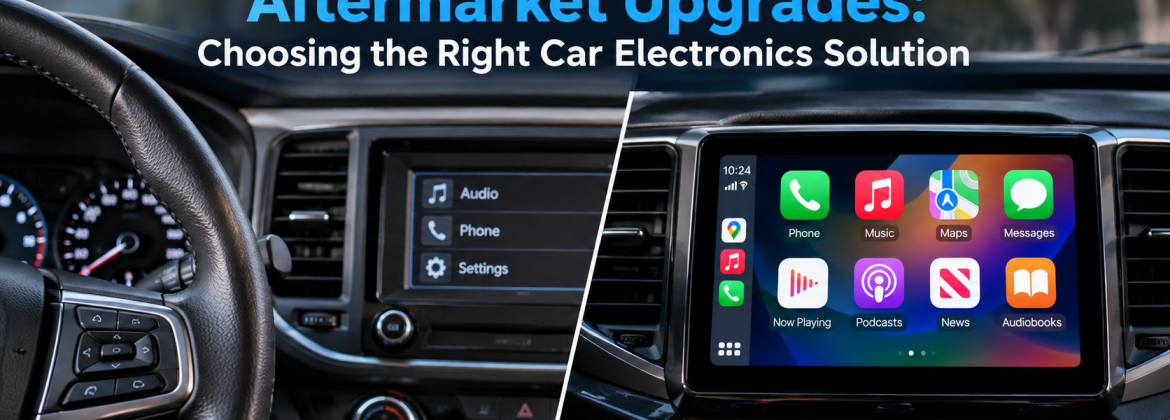
If you are trying to modernize your vehicle’s technology, whether that means adding Apple CarPlay, upgrading the sound quality, or getting a touchscreen that feels more up to date, understanding factory integration vs aftermarket upgrades is the first step. Both options can bring modern features to your vehicle, but they work differently. The right choice depends on your vehicle, your budget, and which factory features you want to keep.
This guide walks through what OEM integration actually means, how it compares to a full stereo replacement, and what to expect from each approach so you can make a decision that fits your specific vehicle rather than a generic recommendation.
Call Audiomobile Hayward at +1 510-839-1992 to find out whether factory integration or an aftermarket upgrade makes more sense for your vehicle.
What Is OEM Factory Integration in Vehicle Electronics?
OEM integration is a term many customers hear without fully understanding what it means in practice. In simple terms, it refers to adding new technology to a vehicle while preserving the factory functions that are already working well, rather than replacing the entire system and starting over.
This typically involves working around, or in cooperation with, existing components like factory steering wheel controls, factory backup cameras, existing vehicle displays, factory amplifiers, and the vehicle’s broader information systems. A successful upgrade is not only about installing a new device. It is about making that new equipment communicate correctly with the vehicle’s existing electronics, so the features you already rely on keep working exactly as they did before. Audiomobile Hayward specializes in this kind of factory-compatible upgrade work, where the goal is modern functionality without unnecessary compromise.
Factory Stereo Replacement vs Keeping the Original System
This is one of the most important decisions in the entire process, and it is worth slowing down to think through carefully rather than defaulting to whichever option sounds more modern.
Factory stereo replacement means removing the existing radio or head unit entirely and installing a new one, typically adding touchscreen functionality, smartphone integration, and improved audio control in the process. A factory stereo replacement gives you the most flexibility in terms of features, since you are choosing an entirely new unit built around current technology.
Factory system upgrade takes a different approach, keeping your original equipment in place and adding modules or integration solutions that bring in new features without changing the vehicle’s appearance or losing existing functionality. This path tends to appeal to owners who like their current setup but want specific modern conveniences added on top.
The right choice depends on your vehicle’s age, which features it already has, what you actually want to add, and how those two things line up in terms of compatibility.
Why Older Vehicles Need Modern Infotainment Upgrades
There is a real technology gap between vehicles built even five or six years ago and what comes standard in new vehicles today. Many older vehicles lack touchscreen displays, smartphone connectivity, built-in navigation, hands-free calling features, and modern audio controls that newer drivers now consider standard.
Upgrading these systems can meaningfully improve daily convenience, the overall driving experience, connectivity with your phone, and entertainment options during longer drives. Common upgrades in this category include adding Apple CarPlay, Android Auto, Bluetooth connectivity, and touchscreen controls to a vehicle that never came with any of them. For a driver whose vehicle otherwise runs perfectly well, this kind of upgrade addresses the one area where the car genuinely feels outdated.
Apple CarPlay and Android Auto Integration Options
Smartphone integration is consistently one of the most requested vehicle upgrades, and it is easy to understand why once you compare what each platform actually offers.
Apple CarPlay brings navigation, music streaming, hands-free calling, and voice assistant access directly to your vehicle’s display, mirroring much of what you already use on your phone. A dedicated Apple CarPlay installation can bring this functionality to vehicles that never offered it from the factory.
Android Auto offers a comparable experience for Android users, including Google Maps, voice commands, messaging, and access to compatible apps through the vehicle’s display. An Android Auto installation follows a similar integration process, adapted for Android-specific features.
Compatibility for either platform depends on your specific vehicle model, your existing stereo system, and the state of your factory electronics, which is why a compatibility check before purchasing equipment saves time and avoids a mismatched installation.
Maintaining Steering Wheel Controls After a Stereo Upgrade
This is one of the most common concerns customers raise before committing to a stereo upgrade, and it is a legitimate one. Many drivers worry about losing volume controls, track controls, phone buttons, or voice assistant buttons that they have relied on for years without thinking about them.
The good news is that proper integration solutions can often retain these factory controls even after installing a new head unit, using an adapter designed specifically to translate your steering wheel’s signals to the new system. Professional installation matters here because incorrect wiring during this process can cause lost functionality, compatibility issues, or system errors that are frustrating to diagnose after the fact. Getting this right the first time avoids the common experience of an otherwise great upgrade being undermined by controls that no longer work the way they used to.
Backup Camera Integration With Aftermarket Screens
A stereo upgrade is also an opportunity to modernize your vehicle’s safety features, particularly around backup camera functionality. Customers generally have three options here: keeping their existing factory backup camera, adding a new backup camera during the upgrade, or connecting an existing camera to a new aftermarket display.
The benefits are straightforward, including better visibility while reversing, easier parking in tight spaces, and generally improved safety awareness. Whether your existing setup works with a new display depends on the camera type you have, your vehicle’s underlying electronics, and the specific display system being installed. A backup camera installation that is properly matched to your new stereo avoids the common problem of a backup camera that technically works but displays a distorted or delayed image.
Factory Amplifier and Speaker Compatibility During Upgrades
Upgrading a stereo is not always as simple as swapping out the head unit and calling it done, particularly on vehicles with factory amplifier systems or premium audio packages already installed. These systems introduce additional considerations around speaker compatibility and signal processing that a basic installation can easily overlook.
Improper matching between a new head unit and an existing factory amplifier can create poor sound quality, volume inconsistencies, or an overall imbalance that makes the upgrade feel like a downgrade. This is where audio system planning, DSP tuning, and proper component matching become important, rather than treating the new head unit as a simple one-to-one replacement for the old one. A system that accounts for your factory amplifier from the start tends to sound noticeably better than one that fights against it.
Common Problems With Poorly Installed Stereo Upgrades
Installation quality has a direct effect on how well a stereo upgrade actually performs, and there are several recurring problems that show up with rushed or inexperienced installations.
- Loss of factory functions that worked fine before the upgrade
- Wiring problems that create intermittent issues or complete failures
- Audio distortion from mismatched components
- Poor physical fitment that leaves gaps or loose panels around the new unit
- Electrical issues that affect systems beyond just the stereo
- Software compatibility problems between the new unit and the vehicle’s existing electronics
Vehicle electronics have become significantly more complex over the past decade, and installations that might have been straightforward on an older vehicle now require real experience with how modern systems communicate with each other.
Choosing Between Touchscreen Upgrade and Complete Audio Build
Not every customer needs the same level of upgrade, and understanding the general tiers available can help you figure out what actually fits your goals and budget.
A basic upgrade typically covers a touchscreen display along with CarPlay or Android Auto, addressing the technology gap without changing much else about the vehicle’s sound. A mid-level upgrade adds better speakers and an amplifier on top of the basic package, meaningfully improving sound quality. A premium upgrade goes further still, involving a full custom audio system, DSP tuning, a subwoofer, and complete integration across every component.
Customers do not always need the most expensive option available. The right upgrade depends on your actual goals, whether that is simply modernizing connectivity or building out a genuinely high-performance sound system, and Audiomobile’s complete vehicle customization services can be scaled to match either end of that range.
Why Professional OEM Integration Matters for Modern Vehicles
Modern vehicles contain complex wiring systems, computer-controlled features, safety electronics, and factory communication systems that all need to continue working correctly after any upgrade. This complexity is exactly why professional installation matters more today than it did on simpler vehicles built years ago.
Professional installation brings several concrete benefits, including correct compatibility testing before any wiring begins, clean wiring work that avoids damaging factory harnesses, retention of the factory features you want to keep, and reliable performance once the installation is complete. Choosing professional installation over a do-it-yourself approach is less about convenience and more about protecting the electronics your vehicle already depends on.
Frequently Asked Questions
What is OEM integration in car audio?
OEM integration refers to adding new audio or technology features to a vehicle while preserving existing factory functions like steering wheel controls, backup cameras, and factory displays. The goal is modern functionality without losing what already works well.
Should I replace my factory radio or upgrade it?
This depends on your vehicle’s age, existing features, and what you want to add. Replacement offers more flexibility and a fully modern unit, while an upgrade preserves your original system’s appearance and factory feel while adding specific new capabilities.
Can I add Apple CarPlay to my existing vehicle?
In most cases, yes, either through a compatible factory stereo upgrade or a dedicated head unit replacement. Compatibility depends on your specific vehicle model and existing electronics, which is why a compatibility check before installation matters.
Can aftermarket stereos keep factory controls?
Yes, in many cases, using an integration adapter designed to translate your steering wheel’s signals to the new head unit. Professional installation reduces the risk of losing this functionality due to incorrect wiring.
Can I keep my factory backup camera after upgrading?
Often, yes, depending on your camera type and the new display system being installed. A professional installer can confirm compatibility and connect your existing camera to the new unit where possible.
Is aftermarket stereo better than factory audio?
Not universally. Aftermarket systems generally offer more current features and customization, while factory audio, particularly premium factory packages, can already include strong amplifier and speaker setups that are worth preserving rather than replacing.
How much does a car stereo upgrade cost?
Cost varies significantly depending on whether you choose a basic touchscreen upgrade, a mid-level system with improved speakers, or a complete premium audio build. A consultation can provide an accurate estimate based on your specific vehicle and goals.
Can older vehicles get touchscreen upgrades?
Yes, touchscreen upgrades are one of the more common requests for older vehicles, specifically because they close the technology gap between an older car and current factory standards, often alongside CarPlay or Android Auto integration.
Why is professional installation important for stereo upgrades?
Modern vehicles have complex, interconnected electronics, and professional installation helps ensure compatibility, clean wiring, and retention of factory features that a rushed or inexperienced installation can easily damage or disable.
What is the best car audio upgrade for my vehicle?
There is no single best answer, since it depends on your vehicle’s existing electronics, your budget, and whether you prioritize modern connectivity, improved sound quality, or both. A consultation can help match the right upgrade tier to your goals.
Find the Right Electronics Solution for Your Vehicle
Every vehicle has different electronics, different factory features worth preserving, and different compatibility requirements, which means there is no single answer that fits every driver. Audiomobile Hayward can evaluate your specific vehicle and recommend whether a factory integration approach or a full aftermarket upgrade makes more sense for your goals and budget.
Call Audiomobile Hayward at +1 510-839-1992 to schedule a vehicle electronics consultation, or reach out through the contact page today.
You can see completed factory integration and stereo upgrade projects from Audiomobile Hayward on Facebook and Instagram.
David Trinh