
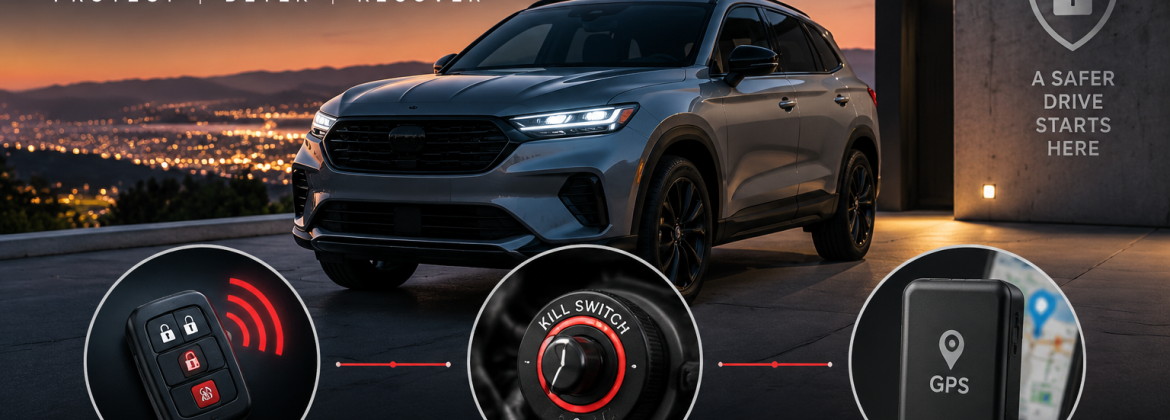
Choosing the right protection for your vehicle can be confusing, especially when comparing different security options like car alarms, kill switches, and GPS trackers. This vehicle security system guide explains how each system works, what type of protection it provides, and how Hayward drivers can choose the right combination based on their vehicle, parking habits, and security needs. Understanding the difference between prevention, deterrence, and recovery solutions can help you build a more effective vehicle security setup before investing in an upgrade.
This article walks through how car alarms, kill switches, and GPS trackers compare, how layered security works, and what to consider for newer push-to-start vehicles. To see the security installation options available locally, visit the Security System Installation page.
Is Your Vehicle Really Protected Against Theft?
Not sure whether your car needs a car alarm, kill switch, GPS tracker, or a complete vehicle security package? Audiomobile Hayward can help you understand the right protection level based on your vehicle type, parking habits, and security concerns.
Call Audiomobile Hayward at +1 510-405-9841 for a professional vehicle security consultation and get expert guidance before investing in the wrong system.
Why Fall Is a Good Time to Review Your Vehicle Security
Fall brings earlier sunsets, longer stretches of darkness, and a seasonal uptick in vehicles parked outside for extended periods, whether for evening errands, holiday shopping trips, or overnight street parking. Vehicles parked in dimly lit areas for longer periods of the day are naturally more exposed, which is one reason many Bay Area drivers use this time of year to take a closer look at their vehicle security setup.
Reviewing your security system now, before the darker months fully set in, gives you time to address any gaps rather than reacting after an incident. This applies whether you already have a basic alarm system or have never installed dedicated security equipment beyond what came with the vehicle.
Car Alarm vs. Kill Switch vs. GPS Tracker
These three systems are often mentioned together, but they serve genuinely different purposes, and understanding the distinction is the first step in building an effective vehicle security system.
A car alarm is designed to detect unauthorized entry or tampering and alert you and anyone nearby with sound and light. A kill switch is designed to prevent the vehicle from starting or running by interrupting a critical part of the ignition or fuel system unless it is disengaged. A GPS tracker is designed to help locate a vehicle after it has already been taken, rather than preventing the theft itself.
None of these systems is inherently better than the others across every situation. They address different parts of the theft timeline, which is why many drivers ultimately choose to combine more than one.
How a Car Alarm Helps Protect Your Vehicle
A car alarm’s primary job is deterrence and detection. Modern systems typically monitor door entry, window breakage, and sometimes motion or tilt within the cabin, triggering a loud alert if something is tampered with.
The presence of a visible alarm system, along with window decals or a flashing indicator light, can discourage opportunistic theft attempts before they even begin. When triggered, the alarm draws attention to the vehicle, which can interrupt an attempted break-in or theft in progress. Alarms are often the most familiar and widely used piece of vehicle security equipment, and many newer vehicles include a basic factory alarm, though aftermarket systems can offer more sensitivity options and additional features depending on the vehicle.
How a Kill Switch Works
A kill switch takes a different approach than an alarm by interrupting the vehicle’s ability to start or run rather than sounding an alert. Depending on how it is installed, a kill switch can interrupt the starter circuit, fuel pump, or ignition system, meaning the vehicle will not start or will stall shortly after starting until the switch is disengaged.
Because a kill switch is typically hidden and silent, it does not rely on scaring someone off the way an alarm does. Instead, it is designed to prevent the vehicle from being driven away at all, even if someone manages to get inside. This makes it a useful layer of protection specifically against theft attempts that get past initial entry, though it does not do anything to prevent a break-in or protect items left inside the vehicle.
How GPS Tracking Helps With Vehicle Recovery
Unlike alarms and kill switches, a GPS tracker is not designed to prevent a theft attempt. Its value comes into play after a vehicle has already been taken by providing location information that can assist in recovery efforts.
A GPS tracking system generally provides ongoing location data that can be accessed through an app or online portal, which can be shared with law enforcement if a vehicle is stolen. Some systems also offer additional features such as geofencing alerts, which notify you if the vehicle moves outside a defined area. Because recovery outcomes depend on many factors outside any single system’s control, a GPS tracker is best understood as a tool that improves your chances of locating a vehicle, rather than a system that guarantees recovery. If you want a closer look at how tracking technology works, the GPS tracking guide covers the topic in more detail.
Security Systems for Push-to-Start & Newer Vehicles
Newer vehicles with push-to-start ignition and more advanced onboard electronics require a different approach to security installation than older vehicles with traditional key ignitions.
Push-to-start systems rely on a proximity key and an onboard computer system to authorize starting, which means a security installation needs to account for how that system communicates before adding a kill switch or alarm integration. Installing security equipment on a modern vehicle without accounting for these electronics can sometimes interfere with normal vehicle operation or trigger dashboard warning lights. This is one of the areas where professional installation matters most, since a technician familiar with your vehicle’s specific electronics can integrate security equipment without disrupting how the factory systems function. You can browse the Audiomobile Hayward home page for the shop’s full range of vehicle electronics services.
Why Layered Vehicle Security Can Provide Better Protection
Many Hayward drivers find that combining more than one type of security system provides more complete protection than relying on a single solution.
Consider how each system addresses a different stage of a potential theft. An alarm can deter or interrupt an attempted break-in before it succeeds. A kill switch can prevent the vehicle from actually being driven away even if someone gets inside. A GPS tracker can assist with recovery if the vehicle is taken despite those first two layers. Layering these systems together means that if one layer is bypassed, another is still in place, which is why many security-conscious drivers choose a combination rather than a single standalone product.
It is worth noting that no combination of security equipment can guarantee a vehicle will never be targeted or stolen. Layered security is about reducing risk and improving outcomes, not eliminating risk entirely.
Professional Security System Installation & Factory Integration
Installing vehicle security equipment involves more than simply attaching a device, particularly on modern vehicles where alarms, kill switches, and GPS units often need to interact with the vehicle’s existing electrical and computer systems.
Professional installation allows a technician to properly integrate new security equipment with your vehicle’s factory wiring, which reduces the risk of electrical issues, false alarms, or dashboard warning lights caused by an improperly connected system. It also allows for testing after installation to confirm that each component functions as intended, including the alarm’s sensitivity settings, the kill switch’s engagement, and the GPS tracker’s connectivity. For newer or more complex vehicles in particular, factory integration is one of the main reasons professional installation tends to produce a more reliable result than a self-installed system. You can learn more about the technicians who handle this work on the Our Team page.
Choosing Vehicle Security for Hayward, Fremont & San Jose
Drivers across Hayward, Fremont, San Jose, and the wider Bay Area face somewhat similar considerations when it comes to vehicle security, including dense parking situations, a mix of street and garage parking, and vehicles that sit for extended periods during work hours or while running errands.
Your specific situation still matters when choosing a system. A vehicle that is regularly parked on the street overnight may benefit more from a combination of alarm and kill switch than a vehicle that is always garaged. A commuter who drives to multiple job sites throughout the Bay Area may place more value on GPS tracking for peace of mind during the day. Thinking through where and how your vehicle is typically parked can help narrow down which combination of systems makes the most sense for you.
How to Build a Customized Vehicle Security Package
Because no single security setup fits every vehicle or every driver, building a customized package usually starts with a conversation about your specific vehicle, your typical parking situations, and what you are most concerned about protecting against.
From there, a technician can recommend which combination of alarm, kill switch, and GPS tracking makes sense, taking into account your vehicle’s electronics, particularly if it uses push-to-start technology. Budget is also part of the conversation, since a single alarm system represents a very different investment than a fully layered setup with GPS tracking included, and it is worth reviewing available financing options for a larger package. Working through these details with an experienced installer, rather than guessing based on generic online advice, is the most reliable way to end up with a system that actually matches your needs.
What a Complete Vehicle Security System Installation Includes
A full vehicle security system installation typically brings together the equipment itself, proper wiring and integration with your vehicle’s electronics, and testing to confirm everything functions as intended. Rather than treating an alarm, a kill switch, and a GPS tracker as separate add-ons installed at different times, having them planned and installed together as one system tends to produce a more reliable, better-integrated result.
Frequently Asked Questions
Does a kill switch completely prevent car theft?
A kill switch significantly reduces the chance that a vehicle can be driven away, but no security device can eliminate the possibility of theft. It works best as one layer within a broader security approach.
Is a kill switch better than a car alarm?
They serve different purposes rather than one being universally better. An alarm deters and alerts, while a kill switch prevents the vehicle from being driven. Many drivers use both together.
Are GPS trackers worth it for cars?
GPS trackers do not prevent theft but can significantly assist recovery efforts if a vehicle is taken, which many drivers find valuable for peace of mind.
Can a kill switch be installed on a push-to-start vehicle?
Yes, though it requires careful integration with the vehicle’s proximity key and onboard electronics, which is why professional installation is particularly important for these systems.
Can a kill switch work with a car alarm?
Yes. Many drivers combine a kill switch with a car alarm as part of a layered security approach, since each addresses a different stage of a potential theft.
What is the best anti-theft system for a car?
There is no single best system for every vehicle or driver. Many owners find that combining an alarm, a kill switch, and GPS tracking provides more complete protection than relying on just one type of system.
Can a security system work with the factory system?
In many cases, yes, though this depends on the vehicle and the specific equipment being installed. Professional installation helps ensure new security equipment integrates properly with existing factory wiring.
Does a car alarm prevent vehicle theft?
A car alarm is designed to deter and alert rather than physically prevent a vehicle from being taken. It works best as one part of a broader security setup.
How much does car alarm installation cost?
Cost depends on the specific system and your vehicle. A consultation can provide an accurate estimate based on your needs.
What is the best vehicle security system for a newer car?
The best setup depends on your vehicle’s electronics and your specific concerns, though newer push-to-start vehicles generally benefit from professional integration to avoid interfering with factory systems.
Get a Customized Vehicle Security Recommendation Today
Every vehicle has different security requirements, especially newer cars with push-to-start systems and advanced factory electronics. Audiomobile Hayward can evaluate your vehicle, recommend the right combination of alarm systems, kill switches, GPS tracking, and other anti-theft solutions, and professionally integrate everything for reliable protection.
Call Audiomobile Hayward at +1 510-405-9841 today to discuss your vehicle security upgrade options and protect your vehicle with a professionally installed security system.
Building Vehicle Security That Fits Your Situation
No single vehicle security system works best for every driver, so it helps to understand how car alarms, kill switches, and GPS trackers each contribute to protection before deciding. Audiomobile Hayward’s team can walk through your options, explain how they work together, and handle installation in a way that integrates properly with your vehicle’s electronics. Contact Audiomobile Hayward to schedule a consultation.
Follow Audiomobile Hayward:
David Trinh